
Academic Help - How to write good paper
  • About Us
  • Glossary
  • Samples
  • Ask an Expert
Categories
  • Academic Assignments
    • Research Paper
      • Capstone Project
      • Dissertation
      • Thesis
      • Research Proposal
    • Review
      • Poetry Analysis
      • Article
      • Film
      • Book
    • Essay
      • Evaluation
      • Analysis
      • Summary
      • Reflective
      • Definition
      • Cause and Effect
      • Descriptive
      • Critical
      • Expository
      • Persuasive (Argumentative)
      • Narrative
      • Compare and Contrast
    • Lab Report
    • Process Paper
    • Academic Coursework
    • Term Paper
    • Case Study
    • Annotated Bibliography
    • Presentation
    • Speech
  • Becoming a Student
    • Scholarship Essay
    • Personal Statement
    • Statement of Purpose
    • Admission Essay
    • Application Letter
  • Business Writing
    • Newsletter
    • Meeting Agenda
    • Business Email
    • Progress Report
    • Meeting Minutes
    • Brochure
    • Business Presentation
    • Business Proposal
    • Press-Release
    • White Paper
    • Business Report
    • Job Application Letter
    • Business Letter
    • Business Plan
    • Resume
    • Cover Letter
  • Letter Writing
    • Resignation
    • Complaint
    • Fundraising
    • Reconsideration
    • Grant Application
    • Informal
    • Hardship
    • Reference
    • Recommendation
  • Creative Writing
    • Novel
    • Haiku
    • Interview
    • Travelogue
    • Memoir
    • Poem
    • Short Story
    • Article
    • Screenplay
    • Book
    • Autobiography
  • General Writing Tips
    • Common Transitions
    • Common Grammar Mistakes
    • Editing
    • Final Draft of an Essay
    • Second Draft of an Essay
    • First Draft of an Essay
    • Words to Avoid in Academic Writing
    • Quotes about Writing From Famous Writers
    • Thesis Statement
    • Researching
    • Essentials of Writing
    • Brainstorming
    • Outlining
  • Q&A board
    • Questions
    • Unanswered
    • Register for Ask a Question
Academic Help. Online Academic Writing Help > Business Writing > How to Write a Job Application Letter

How to Write a Job Application Letter

Business communication today seems to be done mainly by email, or over the phone. Some situations, however, require backup certification, or letters and other documents that provide a confirmation of facts, dates, and names.

Although some jobs only require the applicant to fill in a form, important positions applied for often need a submission of a sound and effective job application letter. How to write a job application letter is an act that not only all students of business, commerce, banking, and finance need to learn, but anyone who one day hopes to apply for the position they have always dreamed of.

An application letter is a business document, part of the essential correspondence between applicant and organization, firm or company, institution or various boards and committees that publish a vacancy. It is a paper frequently used in government, commerce, industry, and academia. Students planning to correspond in any undertaking require the understanding of the main points of a job application letter. Writing a correct job application letter is a useful skill for anyone planning to enter an administrative role in any industry or profession.

In order to write a job application letter in the most exact manner, the writer must understand that the letters employers are familiar with nowadays are established gradually to become effectual, succinct and applicable documents.

A successful job application letter addresses all the points stated in the job advertisement. The manner in which a person responds to a commercial announcement alerts recruiters and employers of their capacity, their level of education, personality, and professionalism.

Steps for Writing a Job Application Letter

The traditional format of a business letter applies to most job application letters. The layout is the first aspect that is noticed: those who receive business letters such as cover letters for a job application expect them to be set out in a specific way.

If the document is set appropriately, the employer or recruiter concentrates on the content and meaning. If your arrangement on the sheet of paper seems incorrect, unusual or non-traditional, the prospective employer will be distracted.

  1. Understand the format, and fill in the content according to that form.
  2. Make a list of all the information to go in the letter.
  3. Be brief, so that the letter can fit onto a single page. Set out the text with wide margins. Position your address, the employer’s address, and the subject of the letter in the correct spaces. The subject must be centered at the top.
  4. Start by stating the reason for the letter.
  5. Contain the important parts in three paragraphs to ensure the main points are clear.
  6. Most job application letters have no letterhead, because they originate from an individual. The message must be placed in the middle, underneath the applicant’s address on the right, between a greeting and a salutation.
  7. The greeting starts, “Dear [Name]”. Always address the employer by their formal name. It is “Dear Jones Firth,” not “Dear Jones.”
  8. The salutation must be formal, such as “Best regards,” or “Thank you for your time and consideration”.
  9. Type your full name in upper case below your legal signature, if necessary.
  10. Job application letters are customarily formatted in block style without indents, with all lines aligned left. Aligning all paragraphs to the left is more legible than full justification.

Key Points to Consider

  • It is not wise to use slang, technical jargon, abbreviations, contractions, or unexplained acronyms in a job application. Neither is it appropriate to use a conversational tone. Job application letters are serious documents often used as material evidence or commercial certification.
  • A job application letter has its own appropriate tone and attitude: assertive but unassuming, confident but not arrogant or conceited. It is improper to write overly long sentences full of pretensions or self-satisfying phrases.
  • Personal items, such as family news or casual felicitations, should be omitted,
  • Always state the reason for the application, the job in question, where you found the announcement, and why you think you are the person most suitable to take up the position.

Dos and Don’ts

Dos

  • Do check all details, even if they are your own and you are familiar with them. Mistakes in addresses, telephone numbers, or email addresses could mean the application letter does not reach its destination on time. If details become confusing to the recruiter, or show the sender to be negligent or forgetful, the opportunity can be lost.
  • Do remember to use the correct traditional layout.
  • Do follow established commercial or academic formats.
  • Do use the best stationery.
  • Do frame your text between an appropriate greeting and a traditional salutation.
  • Do check that the date on your job application letter is the same as the day you put it in the mail.
Don’ts

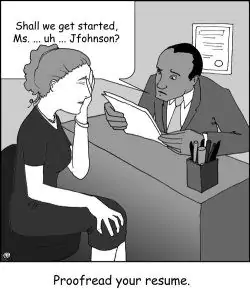
  • Don’t neglect the significant steps of editing, checking, correctly drafting and proofing your application letter.
  • Don’t use a familiar or casual style – letters to apply for a position are impersonal and formal.
  • Don’t include details unless they are pertinent to the core objective for sending the job application letter.
  • Don’t use hackneyed phrases, clichés, or other language that could portray a language weakness. Make sure your turn of phrase is precise.
  • Don’t ignore the fact that punctuation, syntax, grammar, and word choice affect meaning. The whole package must impress any recruiter or prospective employer with your language skills and talents.
  • Don’t use all caps in any instance or too many italics.

Common Mistakes

  • Omitting to request an interview. Do this in the last paragraph and be firm and clear. Being demanding or rude is also a mistake.
  • Long-winded paragraphs.
  • Being sycophantic or fawning.
  • Text that does not match the occasion and the establishment you approach. Avoid colloquialisms and slang. Remember that a well-mannered message is always most effective.
  • The most frequent mistake made in job application letters is to flout convention and place paragraphs, addresses, or salutations in the wrong place.
  • Incorrectly-spaced paragraphs, or a job application letter with more than two paper folds.
  • Insufficient clarity about the position for which you are applying. In addition, people often omit to state their qualification for it, or ask to speak personally with the person in charge.

Now that you have acquainted yourself with the basic job application letter writing tips and rules, you can check out our best job application letter samples to link theory with practice.

How to Write a Job Application Letter
  • 3.67 / 5 5
  • 1 / 5
  • 2 / 5
  • 3 / 5
  • 4 / 5
  • 5 / 5
4 rating (3 votes)
Find suitable writer

Find suitable Essay writer:


Find the most suitable writer who could complete your paper. Select discipline, academic level, press Find button below to get the list of writers.

Quick Article Navigation

Sample (Job Application Letter) Producer of Le Scandal Cabaret Applying to Be a Dog Training Assistant
© 2011-2013, Academic Help.
  • About Us
  • Glossary
  • Samples
  • Terms and Conditions
  • Ask an Expert
Follow us on: