




Have you ever wondered why persuasive essays are such a common assignment in your classes? Well, we might have a guess! Imagine you have a belief or an opinion that you really want to share with others. How would you go about convincing them that your viewpoint is valid? That’s exactly what persuasive essays help you do. They are a key tool in academic writing because they teach you how to make a compelling argument. This skill isn’t just useful in school; it’ll help you in everyday life too, whether you’re debating a new movie with friends or discussing important issues in your community.

✅ AI Essay Writer ✅ AI Detector ✅ Plagchecker ✅ Paraphraser
✅ Summarizer ✅ Citation Generator
In a persuasive essay, your job is to take a stance on an issue and convince your readers to agree with you. You’ll need to present clear reasons and support them with facts. This type of essay sharpens your ability to think critically and express your thoughts clearly. So, why are persuasive essays so popular in school, college, and university? It’s because they are practical, engaging, and develop several important skills. Let’s sort everything out together and learn how to write a persuasive essay that will blow people away!
What Is a Persuasive Paper?
A persuasive essay is a type of writing that requires you to take a stance on a specific issue and convince your readers to see things from your perspective. Your main goal is to persuade your audience that your viewpoint is valid, using a mix of sound reasoning, compelling evidence, and emotional appeal.
There are several types of persuasive essays:
- 🗣 Argumentative essays ask you to argue for one side of an issue using facts and logical reasoning.
- 💬 Opinion essays are more about expressing your personal views and persuading readers with your passion and understanding of the topic.
- 💡 Problem-solution essays, where you identify a problem and persuade the reader to accept your proposed solution.
But you already know how to fight on Twitter, so why do you need another explanation for it? Well, there are many ways to use persuasive techniques and structure your arguments even in everyday conversation or in class. For instance, in a politics class, you might argue about the effectiveness of a government policy. In a psychology course, you could persuade your audience about the influence of nature versus nurture on human behavior. These assignments are necessary because they help develop your ability to construct well-founded arguments, a skill that is needed both in academic settings and in the professional world.
They are not just about making your case; they’re also about engaging your readers and making them think deeply about the subject.
Brainstorming Topics When Writing a Persuasive Essay
When you’re about to write a persuasive essay, the first step is picking a topic. This might seem easy, but it’s actually where you need to apply some strategic thinking. Choose a topic that you’re passionate about, as this will make it easier for you to argue persuasively. However, it’s also important that the topic is relevant to your readers and has enough information available for you to build a strong case.

How to pick a topicfor a persuasive essay? Here’s what might help you:
- Before you begin, make sure you grasp the purpose of a persuasive essay, which is to persuade your readers to come around to your way of thinking.
- Consider the demographics of your audience—their age, education level, and possibly their beliefs. This will help you predict their responses and tailor your essay to resonate with them.
- Selecting a topic that genuinely interests you can make a big difference. Your passion for the subject will come through in your writing, making your argument more compelling.
- A good persuasive essay requires a topic with at least two strong opposing viewpoints. Your task will be to convince your readers that your position is the more valid one. Therefore, avoid topics that are universally agreed upon, as these provide little ground for debate.
Once you have your topic, brainstorming is your next step. This process involves thinking freely to come up with various ideas and arguments for your topic. You can use methods like mind mapping, where you visually organize your thoughts, or listing, where you write down all ideas that come to mind without judging them.
How to Write a Persuasive Essay: Outline and Argumentation
After brainstorming, the next step is to organize your thoughts into a clear structure. You might feel lost at the start, and that’s why we are here to help you. Keep in mind, your main body should have a relatively similar structure to showcase your arguments effectively.
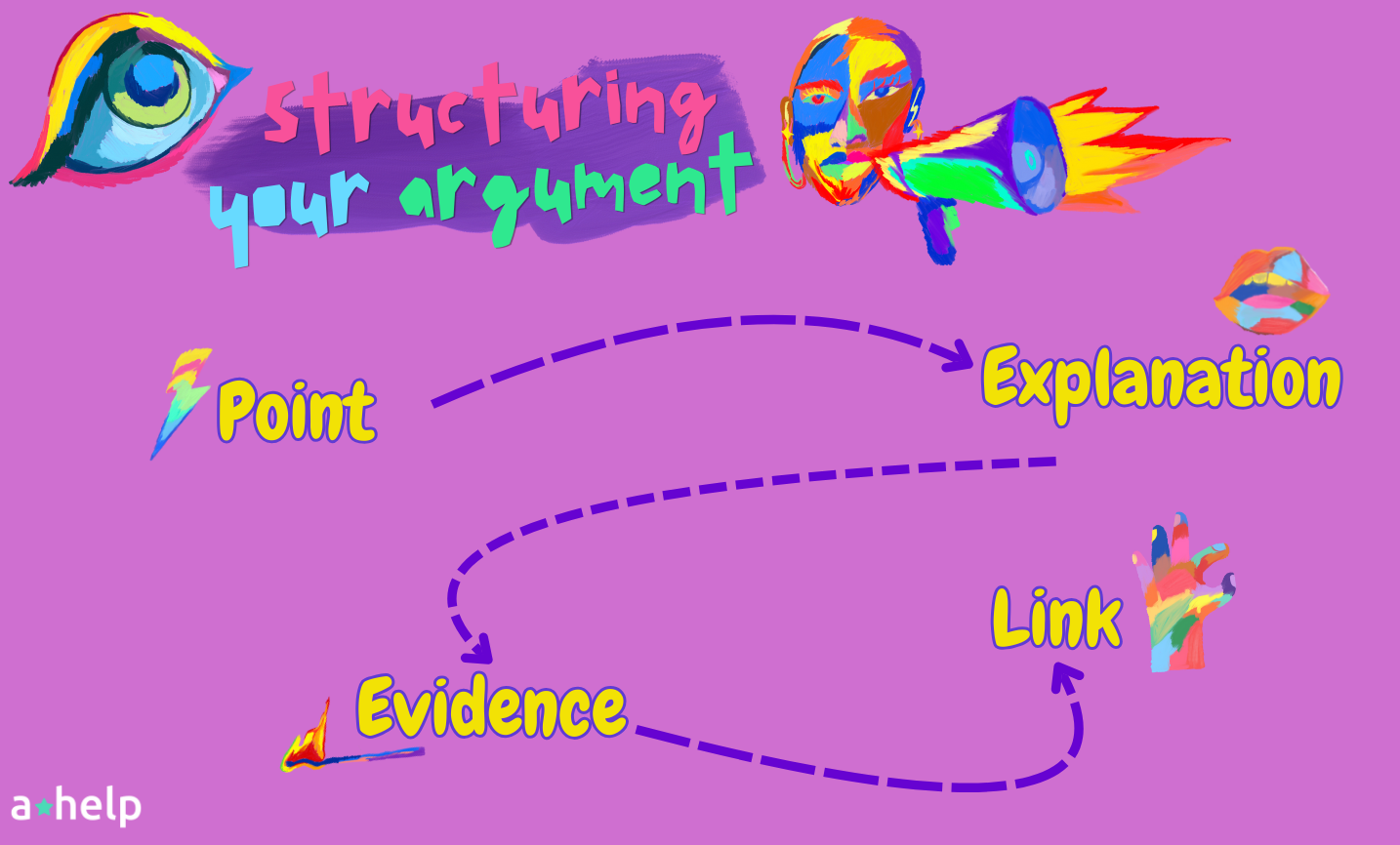
Obviously, there’s no right or wrong way to present evidence; but there is a good way to do so. Here’s how you can outline your persuasive essay, especially when it comes to structuring arguments:
- Introduction: Introduce your topic and state your thesis, which is the main argument you will be defending.
- Body Paragraphs: Each paragraph should focus on a single point that supports your thesis. Begin with your strongest argument and proceed to others in order of strength.
- State the main idea of the paragraph.
- Describe the point in more detail and its relevance.
- Provide facts, statistics, quotes, or examples to back up your point.
- Show how this point connects to your thesis.
- Conclusion: Summarize your main points and restate your thesis in a new light, emphasizing the importance of your argument and encouraging the reader to consider your perspective.
Remember, the key to a successful persuasive essay is in effectively convincing your audience that your viewpoint is the most valid and logical. Use persuasive language, and don’t forget to appeal to the emotions of your readers.
How to Write a Convincing Essay? Persuasive Tips for Students
Writing a convincing essay involves more than presenting information; it’s about persuading your audience with effective tactics and thoughtful presentation. Here are some tips to help you craft an essay that not only informs but also persuades (and, obviously, get an A+ for your assignment).
 Write with a Clear Purpose
Always have a clear goal in mind for your essay. Even the most dull topic like “Most Common Misconceptions about Language Learning” can shine when properly outlined. Whether you need to change readers’ perspectives, encourage them to take action or convince them of a proposed solution, your writing should be directed toward achieving this goal. A clear purpose keeps your arguments focused and compelling, so every paragraph drives home your central thesis in a powerful way.
Try Presenting Beforehand
Rehearsing your essay aloud is an ogten overlooked step in the writing process. This practice can help you identify weak points in your argument or areas that might require clearer explanations. Listening to your words can provide a new perspective and improve the overall flow and effectiveness of your essay. It also allows you to hear the natural rhythm of your language, so that your points are conveyed with the intended emphasis.
Understand Your Audience’s Perspectives
Knowing your audience’s biases and pre-existing viewpoints is key for tailoring your arguments effectively. You can shape your essay to directly address these issues, making your arguments more persuasive, by understanding their concerns and potential objections. This not only makes your essay more engaging but also more likely to sway opinions by directly confronting and countering opposing views.
Craft a Strong and Memorable Conclusion
Your conclusion should reinforce your essay’s main points and leave a lasting impression. Summarize the key arguments you’ve made throughout the essay and restate your thesis. You can also end with a provocative question or statement that keeps the topic on the reader’s mind; this way, the impact of your arguments and the likelihood that they will persuade your audience will likely increase.
Use Persuasive Techniques
Persuasive techniques in essays are specific strategies used to convince readers to agree with the writer’s viewpoint. These techniques are a must because they improve the writer’s ability to sway an audience, making arguments not just heard but felt and agreed upon. They add strength to the presentation, and there are a million different ways to use it.
FAQ
Follow us on Reddit for more insights and updates.
More from Writing an Essay



Comments (0)
Welcome to A*Help comments!
We’re all about debate and discussion at A*Help.
We value the diverse opinions of users, so you may find points of view that you don’t agree with. And that’s cool. However, there are certain things we’re not OK with: attempts to manipulate our data in any way, for example, or the posting of discriminative, offensive, hateful, or disparaging material.