



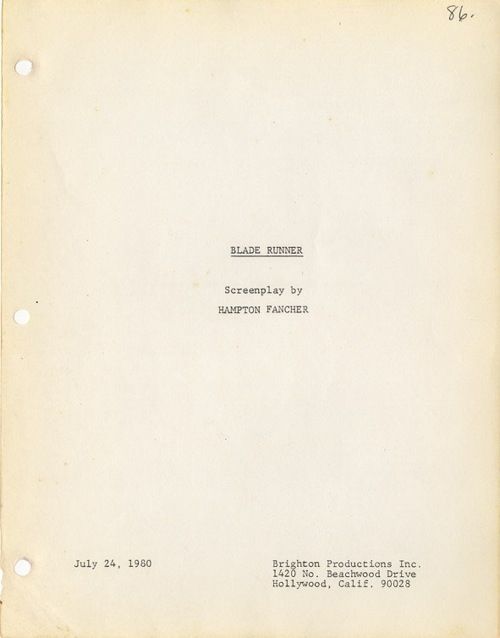
 A screenplay is a creative piece of writing upon which a film or television program is based. It carries all the words spoken by the actors, all the details about the scenario, and all the necessary set directions. The dialog, actions, expressions, and movements of the actors are all detailed in a screenplay.

JOIN OUR LEARNING HUB
✅ AI Essay Writer ✅ AI Detector ✅ Plagchecker ✅ Paraphraser
✅ Summarizer ✅ Citation Generator
✅ AI Essay Writer ✅ AI Detector ✅ Plagchecker ✅ Paraphraser
✅ Summarizer ✅ Citation Generator
There are specific layouts and formats for screenplays from which one cannot deviate. Whether a screenplay is wholly original or taken from another piece of writing, such as a history book or a novel, it must contain the details necessary for a movie to be directed correctly, so it must bear the author’s intentions in a prescribed manner.
Steps for Writing a Screenplay
- Carefully read a number of specially written textbooks on how to write for the screen—either the big screen or television.
- Make notes and understand the words that are used specifically for the film industry.
- Think about a subject or topic, and invent a scenario or story to fit around it. For example, you might choose the topic “wedding” and invent a funny story about an event that goes wrong.
- Make sure that you devise a number of different characters for your screenplay—an odd number, never more than about five, is best for a first attempt.
- Make sure you understand that meaning and context in a screenplay is conveyed through dialog.
- Set aside a generous period of time to draft several different versions of the screenplay: this is not a piece of writing that one can do in a hurry.
- Take notes, watch some similar movies or television programs for ideas, and start to draft the screenplay, beginning with movements and actions, and filling in the dialog using a variety of characteristics for the players.
- A successful screenplay also includes any effects and sounds that can be seen and heard as part of the action by the persons watching the movie or teleplay.
Key Points to Consider
- It is possible to use a software template to write a screenplay. It is also possible to write one in a word-processing program using a classic layout.
- Screenplay writing has its own grammar and specific language requirements. Use the accepted conventions of spacing, font, and size. In the US, Courier in 12pt is generally the norm. Double-space everything.
- It is useful to remember that one page of screenplay text is generally understood to represent one minute of on-screen action.
- A screenplay is also called a script; it contains four deceptively simple elements: headings, character names, action, and dialog. A writer must understand how to format these elements in the standard way, which is centered down the middle of an A4 page, on one side of the paper only.
- Headings, which are always in uppercase, mention the scenes; character names nominate the players and who they depict; action describes the movement; and dialog details all the words spoken.
Do and Don’t
Do
|
Don’t
|
Common Mistakes
- Repetitive or cliched work—never copy well-known gems from cinema and television slavishly. Although it is sound to emulate the masters, original work bearing a new writer’s trademark is always fresh and best.
- Lack of reality. Even the most outlandish works of science fiction and fantasy need a touch of realism and relationship to the human condition.
- Rushing the work, or trying to cram too much into a two-hour piece. Hurried scenes or those that are truncated to make room for more material might work on paper, but will give trouble when acted out.
- Lack of expertise. Sometimes student screenplay writers include so much material in their screenplay that it over-runs the projected number of minutes. Too many or too few characters, too, is the sign of a beginner.
- Forgetting the importance of dialog. Everything in a screenplay depends on the words.
- Long speeches. It is a mistake to put too much description or narration into dialog. They take up time, and bore the audience.
- Not understanding the anatomy of a classic screenplay. It is essentially following a well-known set layout, filled with your own original dialogue and action.
Follow us on Reddit for more insights and updates.
More from Creative Writing Guides

Samples for Writing a Screenplay
Intense Investigation Essay Sample, Example
EXTERIOR: CITY STREETS OF NEW YORK – NIGHT
Front view on close-up of skyscrapers' mirror windows. Then the camera successively switches to showing city streets from a heig...
Back in the USSR - 2 Essay Sample, Example
STAGE
The stage is hidden in darkness. The only visible element is a neon tube encompassing the entire stage; it blinks with red light from time to time. In the background, i...
Road House in Nevada Essay Sample, Example
(Fade in)
EXTERIOR, ROAD HOUSE IN NEVADA – EVENING
An old road house somewhere on a road in the Mojave desert, with a big blinking neon sign “OPEN 24/7,” and...
Comments (0)
Welcome to A*Help comments!
We’re all about debate and discussion at A*Help.
We value the diverse opinions of users, so you may find points of view that you don’t agree with. And that’s cool. However, there are certain things we’re not OK with: attempts to manipulate our data in any way, for example, or the posting of discriminative, offensive, hateful, or disparaging material.